What physical remains reveal about minds
At Lomekwi 3 in Kenya, stone tools dated to 3.3 million years ago preserve evidence of deliberate stone fracture by early hominins. They establish an extraordinarily ancient foundation for technical cognition, including the coordination of actions needed to alter materials. They cannot establish whether their makers recognized some individuals as mentally superior to others, because an artifact preserves a performance without preserving its maker’s interpretation of that performance. 2
The quotation’s fireside setting also has deep archaeological roots. At Barnham in England, researchers identified approximately 400,000-year-old heated sediments, fire-damaged flint handaxes, and iron pyrite that was probably brought to the site. Together, these supported an interpretation of deliberate fire-making in a study published in December 2025. This provides an ancient physical setting for repeated gatherings around controlled fire. The subject matter of conversations remains unrecoverable. 3
The more relevant archaeological evidence comes from differences between toolmakers. At late-Ice-Age sites including Étiolles, Pincevent, and Verberie in France, researchers reconstruct stone-working sequences by fitting discarded flakes back together. Different sequences reveal different levels of competence. Beginners make characteristic errors, intermediate workers understand procedures they cannot consistently execute, and experts successfully manage longer sequences. Researchers have used these patterns to identify apprenticeship and variation in technical proficiency within prehistoric communities. 4
 Image unavailable here.
Open the collection image ↗
This is substantial evidence for people living together with visibly unequal skills, creating circumstances in which judgments about ability would be useful. Age, practice, physical coordination, and instruction all contribute to those differences. Archaeology can recover their practical expression much more confidently than it can recover an underlying ranking of general intelligence. The inference that prehistoric people noticed who learned quickly or solved problems well is reasonable; its first occurrence cannot presently be dated. 4
The earliest strong written witness
The Instructions of Shuruppak survives in an archaic manuscript from Abu Salabikh, approximately 2500 BCE, and another from Adab, approximately 2400 BCE. Its teaching figure possesses recognized wisdom and learning, and that distinction establishes his authority to instruct his son. The content concerns managing property, relationships, danger, and conduct—practical judgments affecting a person’s life. 1
 Image unavailable here.
Open the collection image ↗
The dating rests on surviving third-millennium tablets. Excavations at Abu Salabikh recovered an Early Dynastic literary corpus, providing archaeological evidence that such ideas circulated then. This gives the Sumerian evidence particular weight compared with works whose ancient settings survive only in much younger manuscripts. 5
Textual criticism strengthens the case. Scholars distinguish the archaic Instructions from its expanded Old Babylonian version, produced centuries later. The characterization of its teacher as wise and learned already occurs in the archaic prologue. Its relevance therefore survives the removal of later editorial additions. 1
Wisdom, ignorance, and learning
The Egyptian Instruction of Ptahhotep provides another early witness. It is often assigned an Old Kingdom date because its narrative places Ptahhotep under King Djedkare Isesi, in the third millennium BCE. The principal surviving manuscript, the Prisse Papyrus, dates to approximately 1800 BCE. The University College London edition identifies linguistic and institutional features supporting a Middle Kingdom composition. The narrative setting, composition date, and surviving manuscript date therefore need to be kept separate. 6
 Image unavailable here.
Open the collection image ↗
Its advice explicitly recognizes differences in understanding. Ptahhotep tells the reader to “discuss with the ignorant as with the wise,” while warning against pride in one’s knowledge. Excellent speech may be found even among women working at grindstones. The passage assumes recognizable intellectual differences while allowing useful understanding to appear outside prestigious occupations. 7
The work also emphasizes listening and instruction, observing that nobody is born wise. Its model of mental excellence gives substantial weight to learning and accumulated judgment. That is historically significant: recognition of unequal understanding already coexisted with explanations of how understanding develops. 7
Cleverness defeats strength
Old Babylonian copies of Sumerian proverbs make the relationship between intelligence and practical success particularly explicit. One tablet, catalogued as UET 6/3 462, contains the maxim:
Open the collection image ↗
“Strength cannot keep pace with intelligence.” 8
A related fable, preserved in Sumerian Proverb Collection 5, tells of a she-goat captured by a lion. She persuades him to release her by promising another animal. Asked her name, she answers “I-am-cleverer-than-you.” Once safely inside the fold, she leaves the lion with neither his original captive nor the promised replacement. The story’s humor depends on an audience understanding that one agent can outthink another and that cleverness can overcome physical disadvantage. 9
This is especially close to the quotation’s argument about survival value. The fable directly represents superior intelligence as a means of escaping death. It establishes an ancient belief about intelligence’s usefulness, although a literary story cannot measure its actual evolutionary effects. 9
Explicit differences in problem-solving and mental quickness
Egypt’s Papyrus Anastasi I, a surviving Nineteenth Dynasty manuscript, takes us beyond general praise of wisdom. Its satirical letter has the scribe Hori challenge another scribe’s competence through practical problems involving construction, transport, provisioning, and geographical knowledge. The problems include calculating materials for a ramp and organizing the movement of a large monument. Hori sarcastically addresses his correspondent as a clever scribe while exposing his inability to complete the work. 10
The important feature is the method of comparison. Scribal standing creates an expectation of competence; arithmetic and planning problems test whether the person can perform. The satire assumes its readers recognize meaningful differences between individuals doing the same intellectual occupation. That is a recognizable precursor to assessment through problem-solving, embedded in a literary exercise. 11
In India, Rigveda 10.71.7 contains one of the clearest ancient statements of unequal mental ability. In Ralph Griffith’s translation:
“Unequal in the quickness of their spirit are friends endowed alike with eyes and hearing.” 12
 Image unavailable here.
Open the collection image ↗
The hymn concerns speech and understanding. People can possess the same ordinary sensory capacities while differing in how much they comprehend. Its subsequent imagery compares their capacities to bodies of water of different depths. This passage closely approaches the quotation’s central proposition: familiar companions differ in the quickness and depth of their understanding. 12
The Rigveda was composed orally during approximately 1500–1000 BCE, with this hymn belonging to its later portion. Its antiquity is established through linguistic and textual scholarship and its transmission history. We have no second-millennium manuscript of this verse comparable to the physically surviving Sumerian tablets. The distinction affects the kind of dating evidence available, while leaving the passage exceptionally important as early testimony. 13
Named intellectual reputations
The Hebrew Bible preserves direct comparisons between named people. In 1 Kings 4:31, Solomon’s wisdom is compared with that of Ethan, Heman, Chalcol, and Darda. The passage assumes an audience familiar with reputations for exceptional wisdom and capable of understanding a ranking among their holders. Whatever the historical accuracy of Solomon’s supremacy, the author’s comparison itself is evidence that such distinctions were intelligible. 14
 Image unavailable here.
Open the collection image ↗
Here again, the narrative’s setting and the surviving literary work’s formation belong to different historical questions. The books of Kings transmit and interpret earlier royal traditions through later editorial perspectives. The secure historical inference concerns the intellectual categories used by the writers and their audiences; the passage supplies no independent measurement of the named men. 15
The opening of Proverbs likewise distinguishes the inexperienced, the discerning, and the wise, while presenting instruction as a way to improve understanding. Across this literature, wisdom has intellectual, practical, and moral dimensions. Recognizing that combination helps explain why ancient judgments about who was wise often included how someone behaved and what consequences followed from their decisions. 16
Independent understanding and learning from others
Hesiod’s Works and Days, lines 293–297, offers a striking three-level classification. The best person understands for himself. Another good person can recognize and follow sound advice. The useless person can do neither. The distinction separates independent judgment, the ability to benefit from instruction, and failure in both. 17
 Image unavailable here.
Open the collection image ↗
This is unusually precise evidence. Hesiod identifies different ways that people reach good decisions, then ranks people by their capacity to use them. The framework would remain intelligible in a modern conversation about a colleague who solves unfamiliar problems, another who succeeds with guidance, and another who repeatedly fails to understand either the problem or the guidance. 17
Inference from limited information
The Analects contains an exceptionally direct comparison of intellectual ability. In 5.9, Confucius asks Zigong to compare himself with Yan Hui. Zigong replies:
 Image unavailable here.
Open the collection image ↗
“When Hui hears one part, he understands all ten; I hear one and understand two.” 18
The capacity being compared is inference: how much understanding someone can derive from limited information. Both pupils receive a small amount of instruction; one extracts substantially more from it. Confucius accepts the comparison. This is close to an everyday modern judgment about someone who immediately sees a problem’s wider implications. 18
The Analects developed through generations of transmission and compilation following Confucius’s lifetime, conventionally 551–479 BCE. Its passages cannot automatically be treated as contemporary transcripts of his speech. They do provide evidence from the early Confucian tradition, formed across the subsequent centuries, that differences in inference and learning were explicitly recognized and discussed between named individuals. 18
Learning speed, memory, and individual assessment
Plato’s Republic, written around the fourth century BCE, supplies an unusually detailed account of differences in aptitude. At 455b–c, he distinguishes someone who learns easily from someone who learns with difficulty. The first can discover much beyond a little instruction; the second struggles to retain what has been taught despite considerable effort. The passage identifies learning speed, independent inference, and retention as features of aptitude for an occupation. 19
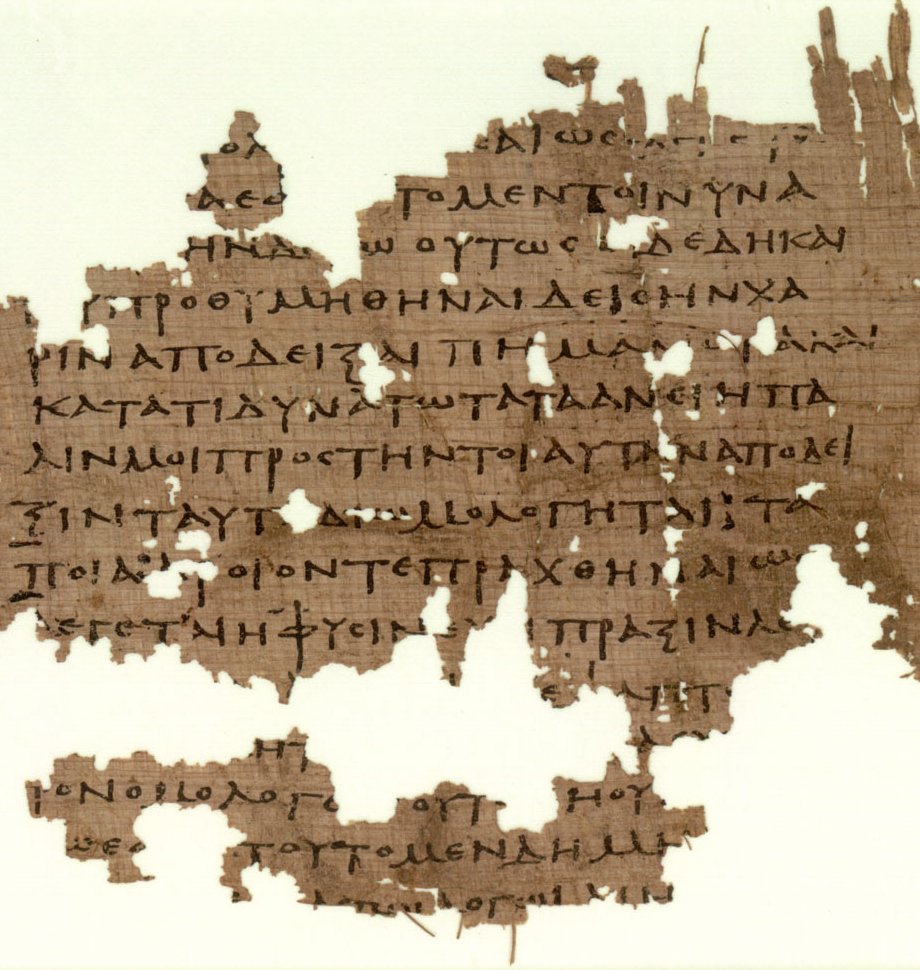 Image unavailable here.
Open the collection image ↗
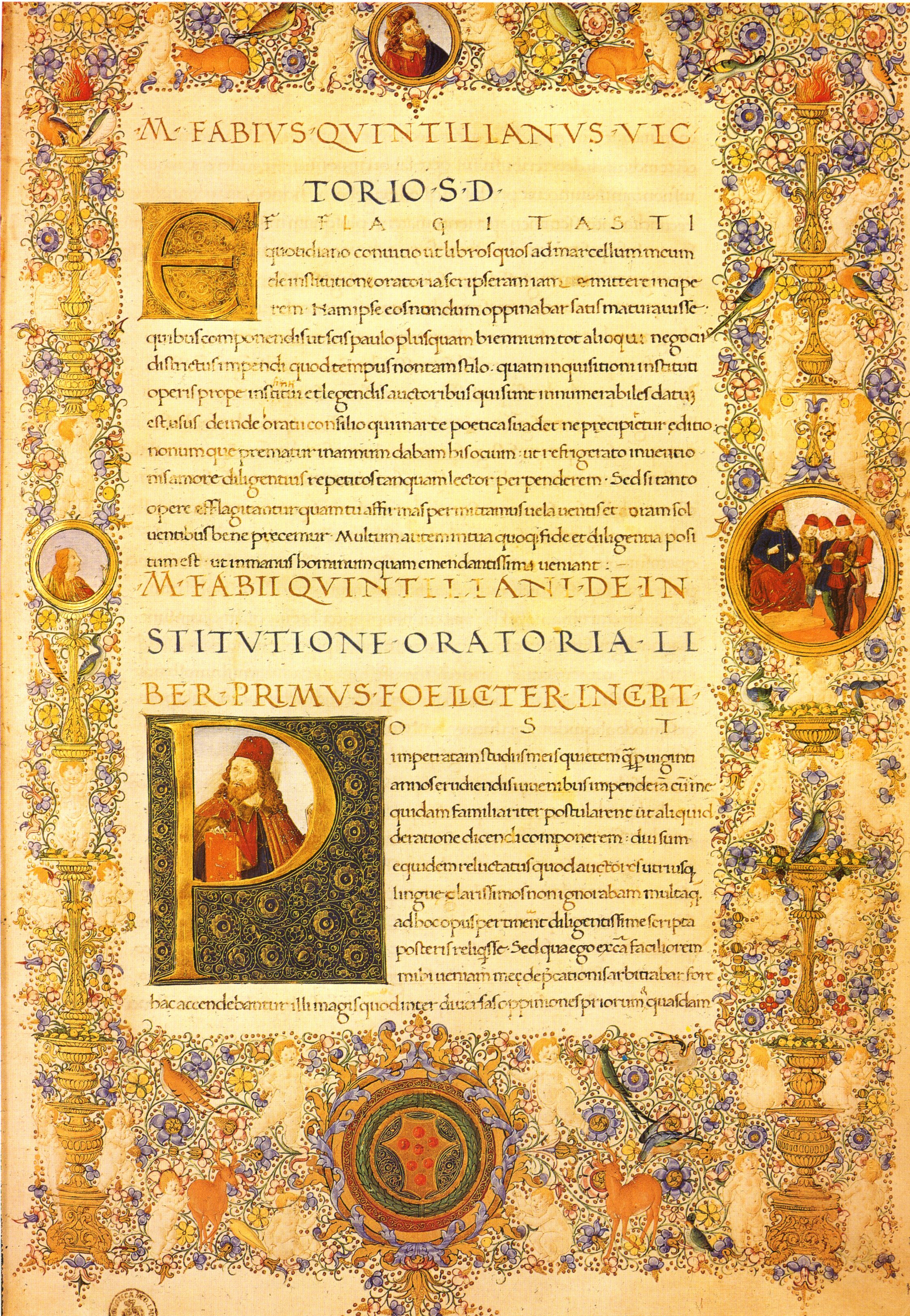 Image unavailable here.
Open the collection image ↗
These are concrete cognitive differences. They also explain why ancient references to intellectual inequality cannot all be reduced to admiration for education or social standing. Plato specifies differences in what people accomplish when exposed to instruction, including what they can subsequently work out for themselves. 19
Around 95 CE, the Roman educator Quintilian made individual assessment part of his advice to teachers. In Institutio Oratoria 1.3.1–3, he directs the teacher to examine a child’s ability and character. A promising memory is “quick to take in and faithful to retain.” He also discusses imitation, responsiveness to teaching, and the danger of mistaking superficial precocity for lasting promise. 20
Quintilian’s educational setting matters. The teacher encounters multiple children, observes differences, and adjusts expectations accordingly. This supplies practical evidence that intellectual variation was treated as a recurring feature of ordinary pupils, with consequences for instruction. 20
Institutions built around comparative performance
China’s civil-service examination system developed under the Sui dynasty, 581–618 CE, and expanded through subsequent dynasties. By the Song period, 960–1279, competitive written examinations had become a major route into the bureaucracy. Candidates were assessed through demanding work grounded in the classical tradition. 21
 Image unavailable here.
Open the collection image ↗
The institutional evidence complements the literature. A state invested in comparing candidates’ learned intellectual performance and assigning offices partly through those comparisons. Education, resources, and preparation shaped the results, while the examinations themselves show that differences in demonstrated cognitive competence were considered administratively consequential. Their historical importance lies in making such comparisons systematic and repeatable across large numbers of people. 21
Pre-contact evidence from the Americas
Maya inscriptions supply valuable evidence from outside the connected literary traditions of Eurasia and North Africa. The title itz’aat, commonly written syllabically as i-tz’a-ti, identified certain distinguished people. Its interpretation encompasses wisdom, cleverness, and skilled accomplishment. Epigrapher Daniel Graña-Behrens’s survey traces examples to approximately 672 CE and discusses its use among court specialists, including scribes and sculptors. 22
Open the collection image ↗
The interpretation combines the inscriptions’ phonetic spellings, the occupations and identities of the people bearing the title, and later Maya lexical evidence. The later dictionaries help interpret a word already present in pre-contact monuments. This is a useful example of epigraphy and historical linguistics working together to recover an intellectual category. 22
The category joined intellectual and accomplished artistic expertise. Its evidential value is that particular individuals were publicly distinguished through a title associated with exceptional understanding and skill, centuries before European contact. It materially broadens the case for cross-cultural recognition of intellectual distinction. 22
Explicit theories of unequal understanding
In the eleventh century, Avicenna described variation in a person’s ability to discover the missing connection that makes a logical argument work. In Book V, chapter 6 of his work on the soul, he states:
“People differ in this aptitude in both quantity and quality.” 23
He explains the difference through how many such connections a person can discover and how quickly they find them. Someone may require instruction to reach an understanding that another person achieves independently. Avicenna’s discussion therefore distinguishes both the extent and speed of reasoning ability, within a systematic account of the mind. 23
Thomas Aquinas addressed the issue directly in the thirteenth-century Summa Theologiae, I, question 85, article 7. His response begins from an empirical observation:
“Experience shows that some understand more profoundly than do others.” 24
 Image unavailable here.
Open the collection image ↗
Aquinas then discusses differences in intellectual power and in supporting capacities such as imagination and memory. His explanation belongs to his philosophical account of human nature, but the observation he seeks to explain is familiar: people differ in the depth of their understanding. By this period, the proposition was sufficiently established to serve as the starting point for a technical philosophical argument. 24
Aptitude becomes a subject of extended investigation
Juan Huarte’s Examen de ingenios para las ciencias, first published in 1575, organized an entire book around differences in intellectual aptitude and their implications for education and occupation. He distinguished capacities including memory, understanding, and imagination, then considered which configurations suited particular kinds of study and work. His explanations drew on the physiology of his time. 25
 Image unavailable here.
Open the collection image ↗
 Image unavailable here.
Open the collection image ↗
Huarte represents a significant development in the history of the idea. The question now extends beyond identifying an exceptionally wise person to describing different intellectual profiles and deciding where each person’s abilities might be most productive. The book’s early English translation explicitly advertised its relevance to choosing a suitable profession. 26
In Leviathan in 1651, Thomas Hobbes described intellectual ability through the speed of thought and its sustained direction toward an objective. He distinguished rapid movement between ideas, judgment in identifying relevant differences, and the ability to keep thinking directed toward an end. His explanation of variation gave an important role to experience, interests, and passions. 27
Adam Smith offered a different causal emphasis in The Wealth of Nations in 1776. Comparing the developed talents of a philosopher and a street porter, he argued that habit, custom, and education accounted for much of their apparent difference. These thinkers agreed that adults visibly differ in intellectual performance while advancing different explanations for how the differences arise. That distinction between observing variation and explaining its origins runs through the history. 28
Measurement and statistical explanation
Francis Galton’s Hereditary Genius, published in 1869, brought statistical ambition to the study of exceptional ability. He examined prominent people and their relatives, using achievement and reputation as evidence of natural gifts. His material concerned family patterns in distinction, with professional eminence serving as a proxy for ability. The method also carried an obvious interpretive problem: relatives can share educational opportunities, resources, and connections as well as biological inheritance. 29
Charles Spearman’s 1904 work introduced a more direct statistical proposition. Performance across different intellectual tasks tends to be positively associated, and a common factor could account for part of that pattern alongside task-specific abilities. This gave the study of intelligence a testable mathematical structure. The relevant evidence became the relationships among measured performances across people. 30
Alfred Binet and Théodore Simon’s 1905 work approached the problem through practical assessment of children. Their proposed methods sought to establish a child’s present intellectual level through performance. The original paper explicitly separated that assessment from questions about whether a difficulty was congenital or acquired and whether it would later improve. Subsequent work developed age-graded comparisons. 31
 Image unavailable here.
Open the collection image ↗
 Image unavailable here.
Open the collection image ↗
These developments introduced different tools for investigating an ancient observation: family comparisons, statistical relationships among tasks, and structured developmental assessment. They also made disagreements more precise. Researchers could ask how reliably a difference was measured, which abilities a task sampled, whether scores predicted later performance, and what explanations the evidence could support. 29
Long-term stability and recognition among living foragers
A particularly striking longitudinal result comes from the Lothian Birth Cohort 1921. Researchers retested 106 people at age 90 using the intelligence test they had taken at age 11. The correlation between childhood and old-age scores was 0.54. That provides evidence of substantial persistence in relative performance across 79 years, alongside considerable room for change and measurement variation. The finding concerns an observed association across individuals, with no implication that the correlation itself identifies its causes. 32
Modern ethnography also speaks directly to the quotation’s imagined hunting community. In a 2014 study involving Hadza hunter-gatherers, respondents were asked to choose whether a good brain or a healthy body mattered more for hunting success. Forty-six of 51 respondents—about 90%—chose the brain. The question used a forced choice, so the result should be understood as an answer to that particular comparison. 33
 Image unavailable here.
Open the collection image ↗
This is direct evidence that members of a living foraging society recognize mental quality as practically important to subsistence. It strengthens the plausibility of prehistoric people making similar judgments. Establishing when their ancestors first made those judgments would require evidence the study does not supply. 33
What the historical record establishes
The evidence becomes progressively more specific. Prehistoric archaeology reveals unequal technical proficiency. Third-millennium Sumerian literature identifies distinguished wisdom and learning. Second-millennium texts describe cleverness overcoming danger and people differing in mental quickness. Chinese, Greek, and Roman authors explicitly compare inference, learning speed, and retention. Medieval thinkers formulate theories of unequal understanding, and modern researchers develop methods for measuring its patterns. 4
The quotation’s central historical claim is therefore strongly supported. Recognition of intellectual differences appears in some of humanity’s earliest surviving literature and recurs across geographically distant traditions, including pre-contact America. The surviving record cannot certify every culture at every moment, and the first conversation about who was cleverest remains beyond recovery. The strongest conclusion is that people have recognized, discussed, and acted on differences in mental ability for at least 4,500 years, with a prehistoric origin made highly plausible by the practical demands and unequal competencies visible in archaeology. 1